
CLIENT: ST. MICHAEL’S EPISCOPAL CHURCH | LOCATION: MANDEVILLE, LA
Click on the image to enlarge. If viewing on a mobile device, please rotate your screen once the image is clicked to display full-screen.
St. Michael's Episcopal Church engaged Greenleaf to evaluate its approximately 12-acre property and establish a long-term master plan for improving the existing church and school campus. The property faced practical site issues, particularly stormwater drainage and access, while the church also needed a framework that would allow future improvements to be implemented gradually as priorities and funding allowed.
Greenleaf began with an assessment of the existing site and worked with the owner, project consultants, adjacent property owners, and Parish Planning + Zoning to develop a coordinated approach to stormwater, circulation, and future development.
Drainage was one of the most immediate concerns. Rather than treating stormwater improvements as an isolated site project, the team evaluated how drainage solutions would affect future buildings, roadways, school circulation, landscape, and the long-term organization of the campus. The resulting strategy addressed existing drainage concerns while seeking a cost-effective solution with limited environmental impact and preserving significant heritage trees throughout the property.


At the same time, Greenleaf developed a master plan to better organize the school portion of the campus and establish locations for future church and school improvements. Because St. Michael's expects to implement the work over multiple phases, the plan considers how each project can solve an immediate need while still supporting the ultimate configuration of the property.
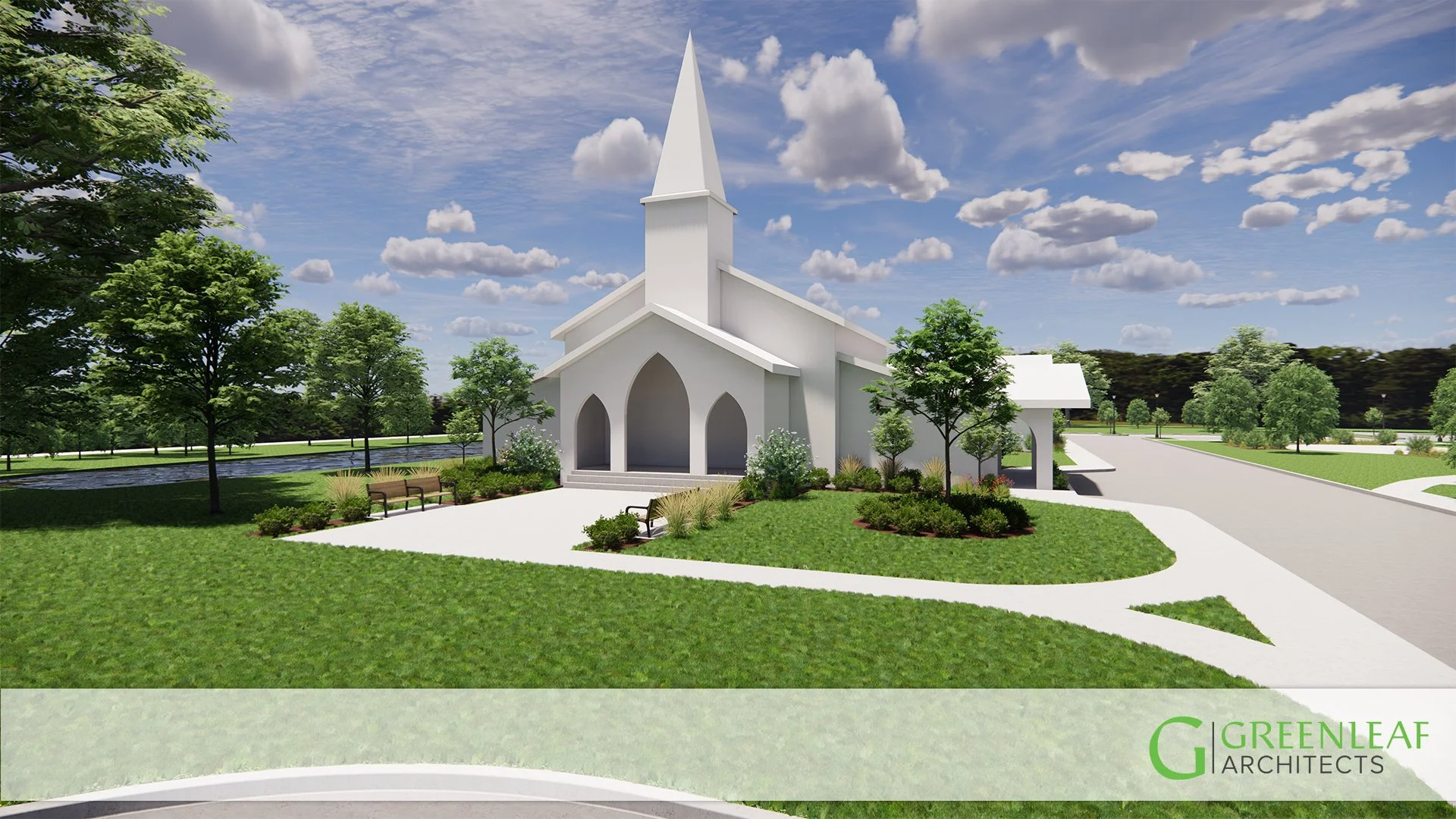
Initial implementation has focused on critical drainage and site access improvements. Future phases are planned to continue improving campus circulation and connectivity, including an additional roadway dedicated to school pick-up and a pavilion that will connect existing facilities and provide another shared space for the church and school community.
Planning the infrastructure, drainage, circulation, landscape, and future building relationships together gives St. Michael's a framework it can continue to follow as resources become available. Instead of solving each campus issue independently, the master plan allows the church and school to make gradual improvements while working toward one coordinated long-term vision.